



Are Cuckoo Clocks Still Made? The Clockmakers Keeping the Tradition Alive
Yes, cuckoo clocks are still made today.
In Germany’s Black Forest, clockmakers continue to produce traditional mechanical cuckoo clocks as well as newer styles that blend historic craftsmanship with modern design. Many authentic Black Forest cuckoo clocks are still made with wooden cases, mechanical movements, hanging weights, pendulums, and the familiar cuckoo call that has made these clocks famous around the world.
The tradition has changed over time, but it has never disappeared.
Are Cuckoo Clocks Still Made?
Yes. Cuckoo clocks are still produced today, including authentic models made in Germany’s Black Forest region.
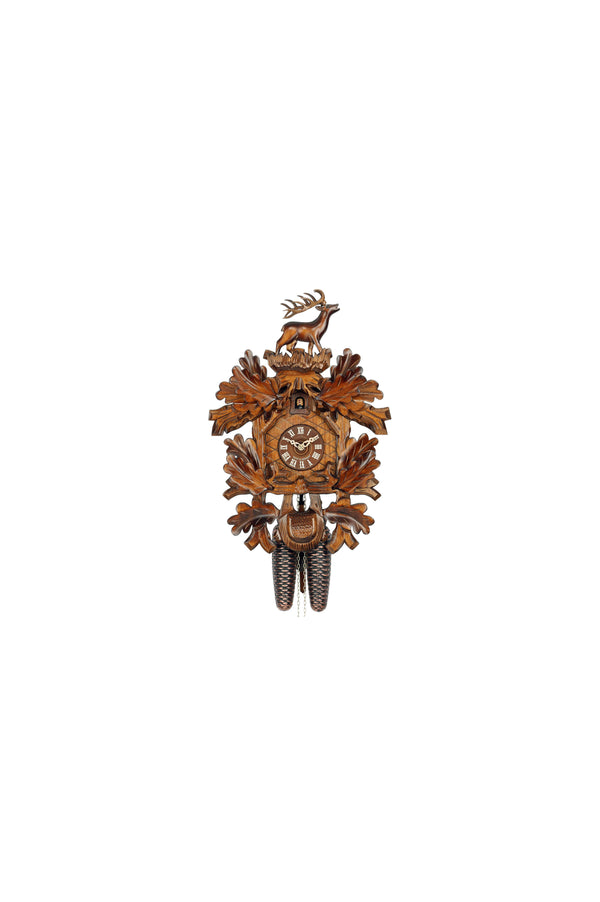
Modern clockmakers create a wide range of designs. Some look much like the traditional clocks people have known for generations, with carved leaves, birds, animals, or hunting scenes. Others feature detailed chalet scenes with dancers, water wheels, music, and moving figures.
There are also more contemporary styles with cleaner shapes and simpler decoration.
For buyers who want the traditional experience, a mechanical clock remains one of the most popular choices. These clocks use hanging weights to power the mechanical movement. As the weights descend, they keep the clock running, and the owner winds the clock by pulling the chains to raise the weights again.
You can explore different styles in our collection of Cuckoo Clocks.
Where Are Cuckoo Clocks From?
Cuckoo clocks are most closely associated with the Black Forest region of southwestern Germany, known in German as the Schwarzwald.
Clockmaking became an important part of life in the Black Forest centuries ago. Generations of craftspeople developed skills in woodworking and mechanical clockmaking, and the region eventually became known around the world for its clocks.
The cuckoo clock became one of the best-known examples of that tradition.
Today, an authentic German cuckoo clock is still closely tied to Black Forest craftsmanship, even though cuckoo-style clocks are now made in other parts of the world as well.
Where Did Cuckoo Clocks Come From?

The history of the cuckoo clock stretches back centuries, and its exact beginnings are still debated. What is clear is that the Black Forest became a major center of cuckoo clock production during the 18th century.
Early Black Forest clocks were practical household items, but clockmakers gradually introduced more decorative cases, carved details, and mechanical features.
One of the most distinctive developments was the use of bellows to recreate the cuckoo bird’s two-note call. That simple sound eventually became one of the most recognizable features in clockmaking.
As designs became more elaborate, makers added carved woodland scenes, chalet houses, music, dancers, animals, and other moving figures.
The German Clock Museum in Furtwangen preserves an extensive collection related to the development of German and Black Forest clockmaking.
Where Are Cuckoo Clocks Made in Germany?
Authentic Black Forest cuckoo clocks are made in the Black Forest region of southwestern Germany.
Several established manufacturers continue to produce clocks there today, combining traditional woodworking and mechanical clockmaking with modern production methods.
For someone shopping for a genuine German cuckoo clock, the place of manufacture matters. A clock may have a chalet-style case or German-inspired details without actually being made in Germany.
One of the clearest indicators of authenticity for a traditional mechanical model is VdS certification.
Black Forest Clockmakers Still Making Cuckoo Clocks Today
Several long-established Black Forest manufacturers continue to make cuckoo clocks today, carrying traditional clockmaking techniques into a new generation of designs.
At Fehrenbach Black Forest Clocks®, we carry clocks from respected makers including Anton Schneider, August Schwer, HEKAS, HÖNES, and Rombach & Haas.
Anton Schneider is known for traditional carved and chalet-style clocks, while August Schwer is recognized for detailed mechanical cuckoo clocks and award-winning designs. HEKAS and HÖNES continue to produce a wide range of traditional Black Forest styles, and Rombach & Haas brings a more modern and contemporary approach to the cuckoo clock tradition.
Together, these manufacturers show how Black Forest clockmaking continues to evolve while preserving the craftsmanship and mechanical traditions that have defined cuckoo clocks for generations.
What Is a VdS-Certified Cuckoo Clock?
VdS certification helps identify mechanical cuckoo clocks that meet established Black Forest production standards.
The VdS certifies qualifying mechanical clocks that are produced in the Black Forest and meet its requirements for traditional construction.
For buyers, VdS-certified cuckoo clocks offer an added level of assurance that the clock is genuinely connected to the Black Forest clockmaking tradition.
Battery-operated and quartz cuckoo clocks do not qualify for VdS certification because the certification applies specifically to qualifying mechanical clocks. That does not mean a quartz model cannot be made in Germany.
You can learn more in our guide to VdS Certification.
How Do Mechanical Cuckoo Clocks Work?
Traditional mechanical cuckoo clocks use weights, chains, gears, and a pendulum to keep time.
As the weights slowly descend, they provide the power needed to run the movement. The owner periodically pulls the chains to raise the weights again.
Mechanical clocks generally come in 1-day and 8-day versions. A 1-day clock typically needs to be wound each day, while an 8-day cuckoo clock usually needs winding about once a week.
The familiar cuckoo sound is created by bellows inside the clock. On more elaborate models, separate mechanisms may also operate music, dancers, water wheels, or other moving figures.
For many owners, winding the clock and watching those mechanical features come to life are part of the appeal.
Are Cuckoo Clocks Handmade?

Many Black Forest cuckoo clocks involve a significant amount of skilled handwork, although the exact process varies by maker and model.
Cases may be carved, stained, painted, assembled, and finished by experienced craftspeople. Chalet clocks can include numerous decorative details and moving components that require careful assembly.
At the same time, modern clockmaking also uses specialized manufacturing for precision parts and mechanical components.
The result is often a combination of traditional craftsmanship and modern production methods.
How Do You Choose the Right Cuckoo Clock?
Start by deciding what matters most to you.
If you want the traditional experience, a mechanical 1-day or 8-day cuckoo clock may be the best fit. If convenience is more important, a quartz model may be easier to maintain.
You should also consider style. Traditional carved clocks often feature leaves, birds, animals, or hunting scenes, while chalet clocks may include music and moving figures. Contemporary designs offer a simpler look for more modern interiors.
Our Cuckoo Clock Buying Guide can help you compare movements, styles, features, and winding schedules.
Because a cuckoo clock can be a meaningful investment, we are here to help before and after your purchase. Our team can answer questions about choosing the right clock, setting it up properly, understanding its features, and caring for it over time.
A Tradition That Is Still Ticking
Cuckoo clocks may be rooted in centuries of Black Forest history, but they are still very much a living tradition.
Today’s clockmakers continue to produce everything from classic mechanical clocks to detailed chalet designs and contemporary interpretations. For collectors, gift buyers, and anyone who appreciates traditional craftsmanship, the cuckoo clock remains more than a decorative object. It is a working piece of German clockmaking history that continues to find a place in modern homes.
Frequently Asked Questions About Cuckoo Clocks
Are cuckoo clocks still made in Germany?
Yes. German manufacturers continue to make cuckoo clocks in the Black Forest, including traditional mechanical models and newer designs.
Are all cuckoo clocks made in Germany?
No. Cuckoo-style clocks are made in many countries. If German origin is important to you, check the manufacturer and place of production.
What makes a Black Forest cuckoo clock authentic?
An authentic Black Forest cuckoo clock is made in the Black Forest region of Germany. Qualifying mechanical models may also carry VdS certification.
What is the difference between a 1-day and 8-day cuckoo clock?
A 1-day mechanical clock usually needs winding every day. An 8-day cuckoo clock generally needs winding about once a week.
Are battery cuckoo clocks made in Germany?
Yes. Some German manufacturers make quartz cuckoo clocks. However, quartz clocks do not qualify for VdS certification.